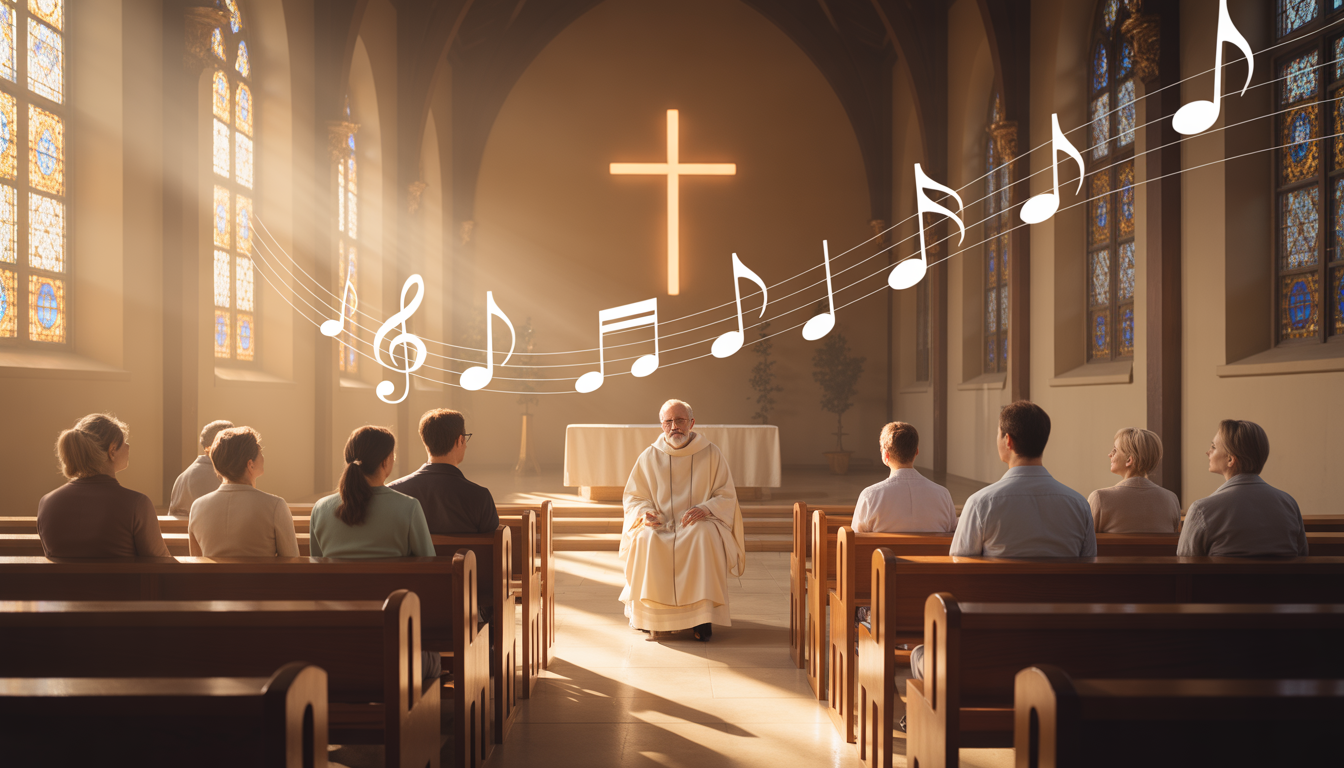
Music plays a very important role in Christian worship, as it helps them practice their faith. A combination of music and teaching not only strengthens the words; it also influences how those words are accepted and retained in memory. Music for Jesus Christ teachings by Father Paul Dakissage can be understood through this deeper function: music as a form of listening that guides reflection rather than instruction.
Instead of delivering belief through explanation alone, music invites participation. It creates space for teaching to be encountered emotionally and intellectually simultaneously.
Music as a Medium of Teaching
Teaching through music is not about simplification. The concept centers around resonance. The combination of melodies with rhythms enables listeners to learn through musical teaching, which stays with them after the performance ends.
In Christian tradition, music has supported teaching by:
- Embedding meaning through repetition.
- Using emotion and memory in tandem.
- Promoting involvement in the community.
- Allowing reflection without urgency.
Music for Jesus Christ teachings by Father Paul Dakissage reflects this tradition by emphasizing understanding shaped over time rather than immediate clarity.
Why Music Deepens Teaching
Spoken teaching relies on attention in the moment. Music extends attention beyond the moment. A melody can return unexpectedly, bringing teaching with it into daily life.
This endurance gives music a unique role in Christian formation. It goes with the believer through daily life, introspection, and uncertainty.
Instead of being remembered, teaching becomes something that is experienced.
The Theology of Sound: How Music Encodes Doctrine
Theological language functions through music. In contrast to dogma, which employs exact definitions, music expresses the same principles in an experiencing register through harmony, pace, and dynamics. Music for Jesus Christ teachings by Father Paul Dakissage recognizes that a low key can properly hold the pain of the Passion, or a melody might transmit the joy of the Resurrection. These works frequently transcend intellectual barriers to immediately touch the heart.
The non-propositional nature of this acoustic theology makes it potent. It instills optimism and grief in the listener rather than arguing for them. The sound itself becomes an embodiment of the lesson. Important components of this encoding consist of:
Harmony: The Christian journey from struggle to peace can be reflected in chords that move from discord to resolve.
Tempo & beat: While a free, rubato passage may suggest the movement of the Holy Spirit, a constant, unwavering beat might highlight God’s constancy.
Silence and Rest: Well-placed musical pauses allow the listener’s individual reaction, enhancing the lesson’s interactive and intimate nature.
Listening as Spiritual Practice
The sense of hearing does not get its due in discussions regarding faith. Yet Christian spirituality has long recognized listening as essential to understanding.
Music fosters listening by slowing the listener. It discourages distraction and invites presence. When teaching is paired with music, the listener becomes engaged.
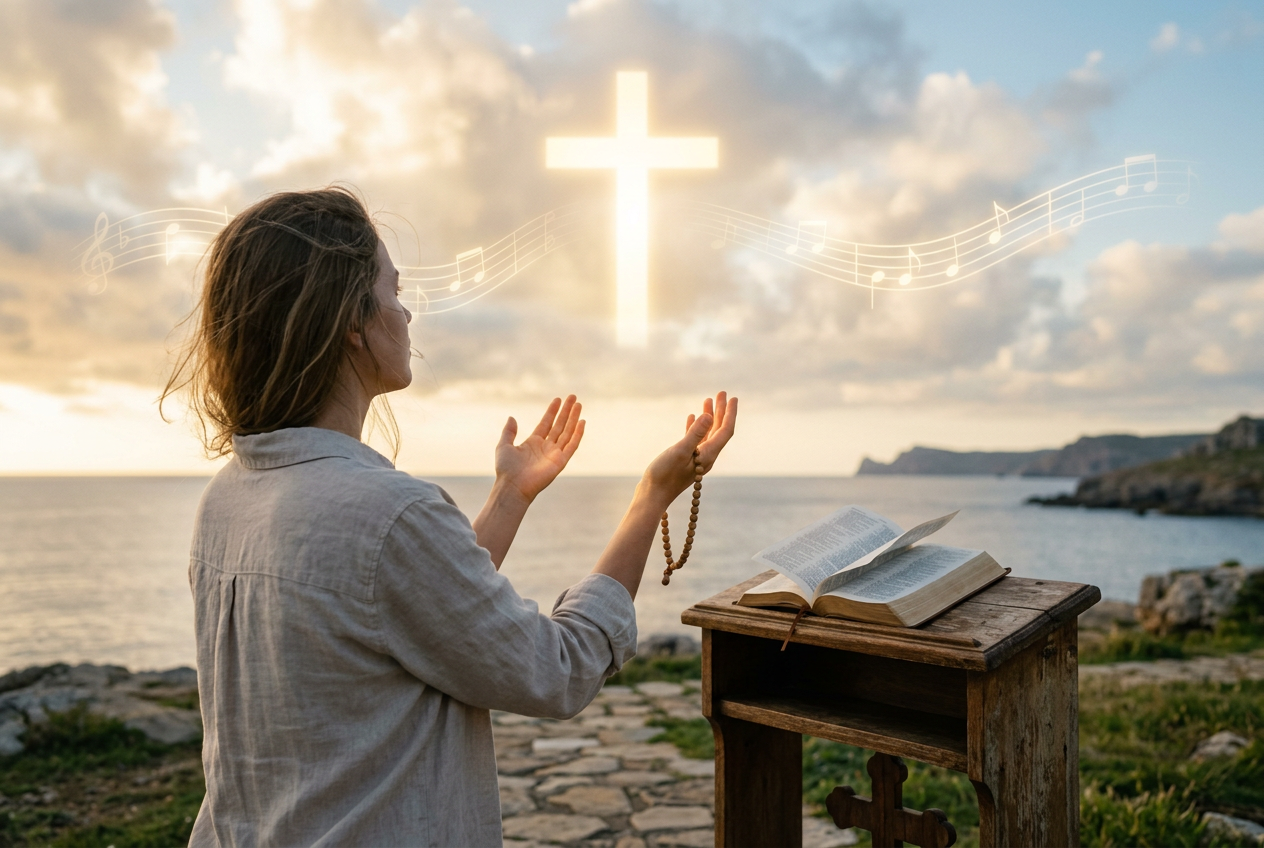
Music for Jesus Christ teachings by Father Paul Dakissage highlights this practice by creating conditions where listening becomes a form of prayer.
Teaching Without Urgency
One of music’s strengths is its refusal to rush. A song unfolds at its own pace, guiding the listener without pressure.
This pacing allows teaching to:
- Be received without resistance.
- Encourage contemplation rather than reaction.
- Remain accessible across different life stages.
- Support repeated engagement.
Music teaches gently, reinforcing faith without coercion.
Repetition’s Function
Repetition is sometimes confused with redundancy in music. In faith-based teaching, repetition deepens meaning.
Each return carries new significance shaped by experience. A teaching heard repeatedly through music evolves alongside the listener.
This process supports faith as growth rather than accumulation.
Music as a Mnemonic Bridge to Scripture
Scriptural lessons are woven into the very fabric of memory through the use of music as a potent mnemonic device. In times of need, a verse placed to an engaging tune is much more likely to be remembered than one that is just read. Music for Jesus Christ teachings by Father Paul Dakissage transforms abstract lessons into unforgettable, portable anchors for faith.
This process alters the way scripture is internalized. The music lets one relive the significance of the words, not just recall them.
Every time a particular fable or lesson is recalled, the emotional tone of the music associated with it becomes a part of its interpretation, enhancing comprehension.
Music and Communal Memory
Christian music is rarely solitary. It forms collective memory. Songs learned in the community are recalled together, reinforcing shared belief and identity.
Music for Jesus Christ teachings by Father Paul Dakissage contributes to this communal dimension by supporting teachings that resonate beyond individual interpretation.
Faith becomes something shared and sustained.
Why Music Remains Relevant in Teaching Today
In a culture saturated with noise, meaningful music offers focus. It cuts through distraction by engaging attention fully.
Music remains relevant because it:
- Bridges intellect and emotion.
- Supports learning through experience.
- Encourages reflective participation.
- Sustains teaching beyond formal settings.
Its impact is subtle yet enduring.
Core Characteristics of Music for Jesus Christ Teachings by Father Paul Dakissage
From an on-site editorial perspective, this approach can be understood through several defining elements.
These include:
- Teaching through resonance rather than explanation.
- Emphasis on listening as a spiritual discipline.
- Use of repetition to deepen understanding.
- Integration of teaching into daily life.
- Support for communal faith experience.
When taken as a whole, these components show how important music is to Christian education.
FAQs | A Dive into the World of Music for Jesus Christ Teachings by Father Paul Dakissage
Q1: In what ways does music complement the teachings of Jesus Christ?
A: Music aids memory, feeling, and reflection, thereby deepening understanding.
Q2: Is music meant to replace spoken teaching?
A: No. It complements spoken teaching by extending its reach and impact.
Q3: Why is repetition important in faith-based music?
A: Repetition allows meaning to deepen as the listener’s experience changes.
Q4: Who benefits from music-based teaching?
A: Anyone seeking a reflective and enduring approach to understanding Christian teachings.
Q5: Can music function as prayer?
A: Yes. Paying close attention can be a way to engage in prayer.