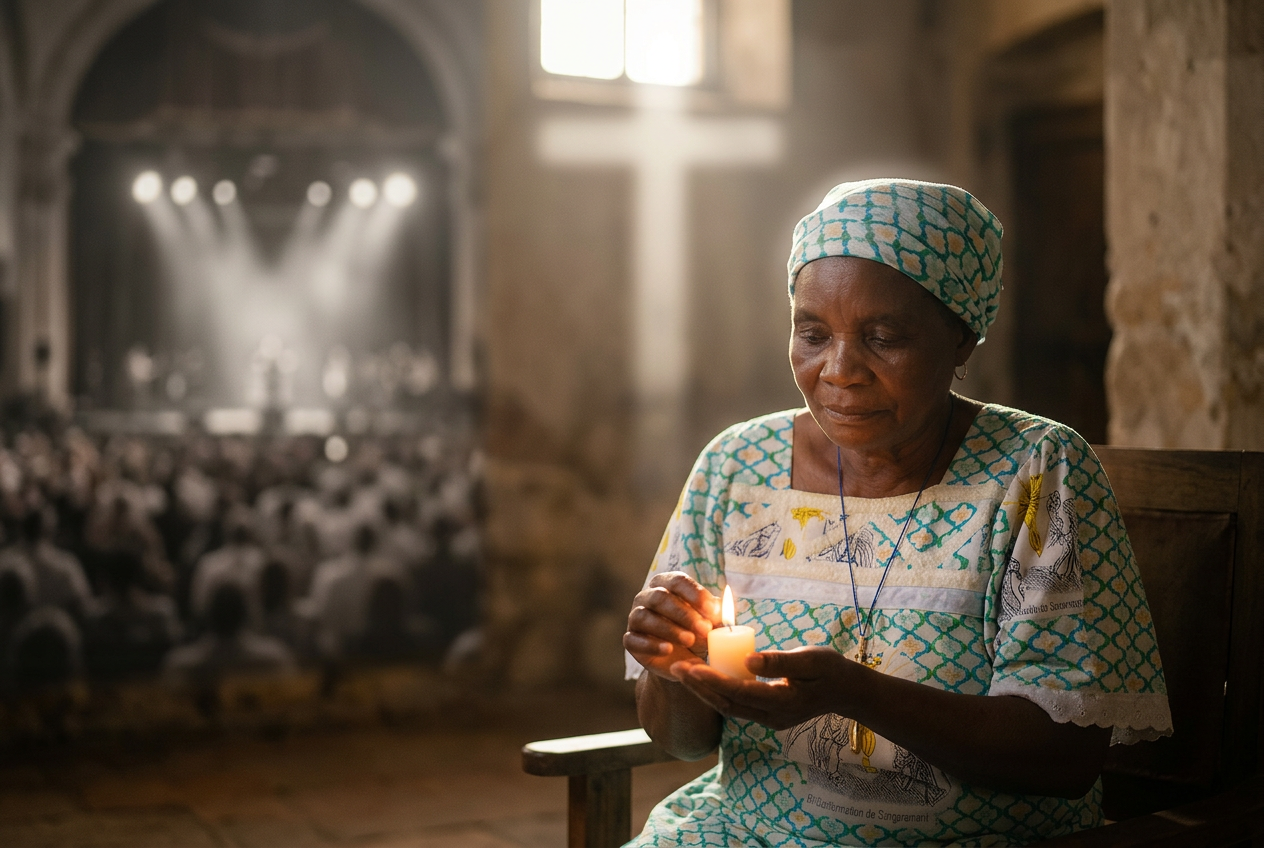
The generally remembered and popular narratives of influence contain references to world powers, leaders, exclusion, and severe shocks. However, many of the most persistent forms of influence develop covertly, without notice or spectacle. This more subdued tradition includes The Light She Left Behind. It looks at how one life, lived with humility and conviction, can influence others long after it is over.
The story examines how meaning is passed down through presence and consistent behavior, rather than through faith as fixed belief and legacy as lasting achievements. The text challenges readers to rethink how they acquire knowledge and how knowledge is maintained throughout time.
Legacy Beyond Accomplishment
Legacy is often associated with achievement, recognition, or observable results. This concept is reframed in The Light She Left Behind. As it is presented here, legacy is neither intentionally created nor made public. It develops gradually via moral stability, lived choices, and the ability to face hardship without resentment.
Neither social status nor institutional authority characterized the life at the heart of the story. The development of the situation occurred through normal actions, including hospitality, prayer, self-control, forgiveness, and fortitude. The cumulative effect of these unimportant actions establishes a wisdom that people hand down to future generations.
The lived human experience is consistent with this interpretation of legacy. People are frequently more influenced by what they see over time than by what they are told. The book demonstrates how silent people spread their beliefs throughout society.
Faith as Practice Rather Than Language
The difference between faith as embodied practice and faith as verbal belief is a major issue in The Light She Left Behind. The narrative’s subject expressed conviction without using theological terminology. Rather, belief was communicated through behavior, especially at vulnerable or morally challenging times.
This representation casts doubt on the notion that formal education or eloquence are prerequisites for spiritual authority. It implies that faith becomes instinctive rather than performative when it is absorbed. Decisions are made to stay in line with conscience rather than to convince others.
A portrayal like this has resonance across religious and cultural divides. Even readers from different religious traditions can recognize the believability of conviction shown through consistency rather than mere statements.
The Role of Adversity in Shaping Wisdom
The story shows that it is best to avoid pain because it blocks people from growing. The different difficulties that people face in life eventually develop into personal problems. The characters in the story face uprooting, sorrow, and isolation, which, in the end, make them grow into people. The subject develops internal trust, which replaces his need for external proof after these experiences.
The approach avoids using simplified stories about resilience as its main approach. People demonstrate strength by maintaining their ethical conduct even in times of doubt. The resulting knowledge exists in three forms: situational, relational, and adaptable.
Such framing is congruent with studies on moral growth and experiential learning, which repeatedly demonstrate that values are most fully incorporated when tested by real-world restrictions.
Silence as a Form of Teaching
The Light She Left Behind’s focus on silence is one of its more notable features. In this situation, teaching takes place by example rather than by instruction or correction. Meaning can be communicated through silence.
The story implies that silence can be more informative than explanation when combined with consistency.
This viewpoint offers a contrast in a setting where criticism is increasingly prevalent. It suggests that not all influence must be expressed in order to be successful.
Key Themes Explored in The Light She Left Behind
Fundamentally, The Light She Left Behind explores how coherence between belief and action, rather than authority or recognition, forms meaning. A few interconnected elements that influence the reader’s perception of faith, memory, and moral inheritance recur throughout the story.
Among the main themes are:
- The imparting of values by example as opposed to instruction.
- Instead of using formal terminology, faith is expressed as a daily practice.
- Restraint and quiet are moral communication techniques.
- Adversity, not ease, shapes endurance.
These themes are presented as patterns that naturally arise from lived experience rather than as conclusions. The assumption that wisdom is situational and cumulative is reinforced by its recurrence at various phases of life.
The long-term consequences of such a life on others are the subject of a secondary layer of the story. It has been demonstrated that influence endures subtly, influencing choices and viewpoints even when the source is no longer physically present.
This impact can be seen in:
- Instead of nostalgia, memory serves as a stabilizing force.
- Generational transmission of moral values.
- The normalization of bravery via consistent modeling.
- Recognizing that legacy is relational rather than symbolic.
These components work together to create what the book calls the “light” that endures, steady, inconspicuous, and long-lasting.
Memory and Transgenerational Influence
In the story, memory remains a device for holding together a continuous thread through the narrative. The life depicted continues to influence through held memories, remembered gestures, and passed-down ideals. These components create an informal yet enduring moral archive.
Crucially, this influence is not forced. Those who inherit it use it sparingly and interpret it in light of their own circumstances. In this sense, the light that is “left behind” offers orientation rather than direction.
Why Stories Like This Matter
The Light She Left Behind contributes to a broader discussion of the sources of meaning, authority, and wisdom. It undermines narratives that link visibility with significance by emphasizing a typical, coherent life.
The story shows how human behavior develops through hidden forces that drive it. People operate their systems through three core principles: providing consistent results, trustworthiness, and commitment to ethical standards.
The story demonstrates that everyone should adopt this way of life.
Concluding Reflection
The Light She Left Behind’s timeless value lies in its moderation. It does not aim to instruct or persuade explicitly. Rather, it depicts a life and lets its consequences develop organically.
The title uses the term light to describe a form of continuous illumination that provides direction without creating excessive brightness that obstructs movement through space. The narrative has a quiet yet essential impact on discussions about faith and legacy by examining how people develop and share their inner radiance.
FAQs – Answers Transcending Faith and Legacy
Q1: What is The Light She Left Behind about?
A: The Light She Left Behind is a thoughtful story that explores how a regular life can have a lasting moral and spiritual impact when lived consistently and with faith. The work focuses on three elements: heritage and memory, and the authentic beliefs people maintain throughout their lives.
Q2: Is The Light She Left Behind a memoir or a spiritual reflection?
A: The narrative combines elements of spiritual reflection with personal life experiences. The work uses real-life events as its foundation to explore faith and meaning over time while telling the story of a person’s life.
Q3: Does the book focus on theology or doctrine?
A: The story presents faith as a living practice that exists beyond the boundaries of academic theology.
Q4: Who is the central figure in The Light She Left Behind?
A: The story’s main character is a mother who demonstrated strength, humility, and religious belief throughout her life.
Q5: What does the “light” symbolize in The Light She Left Behind?
A: The light actually symbolizes enduring spiritual and moral guidance, something steady rather than dramatic or overwhelming.