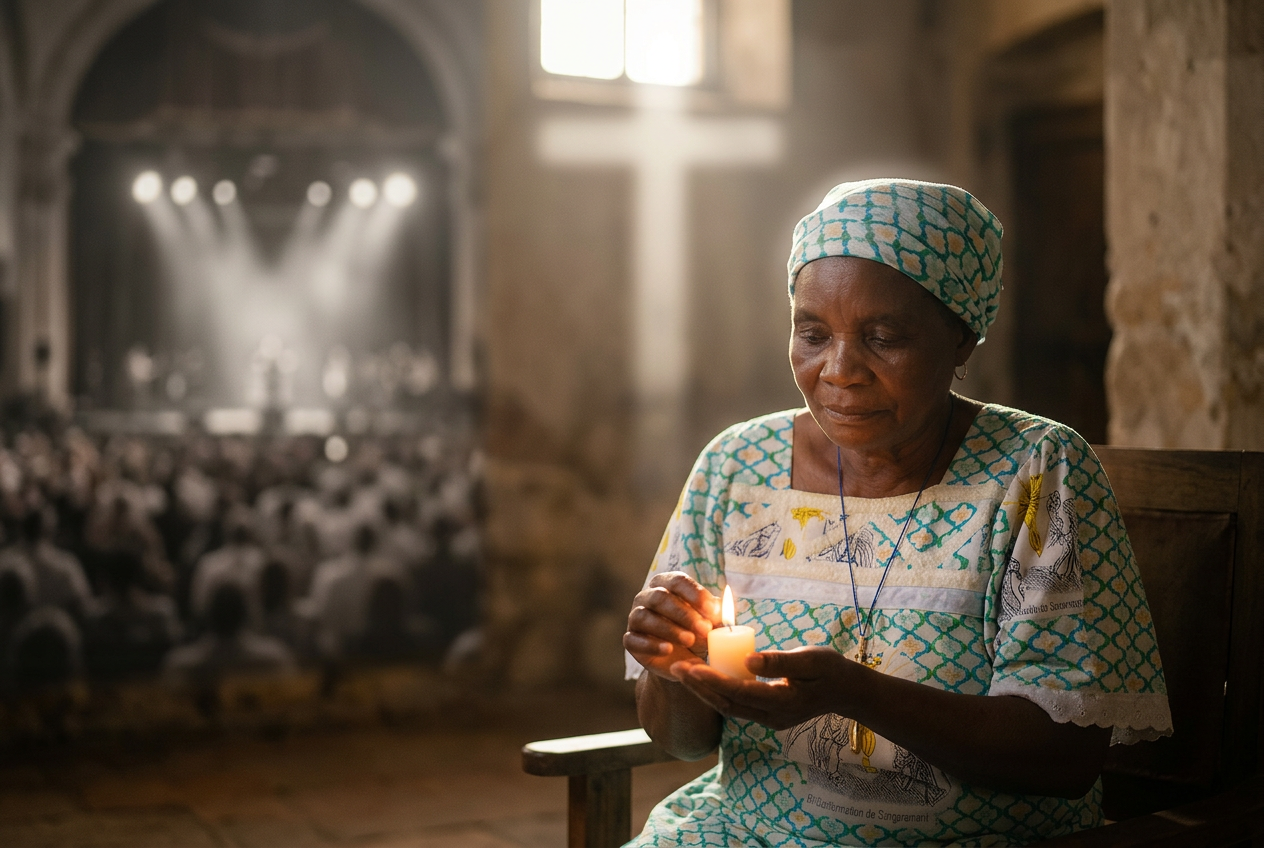
Certain stories don’t develop dramatically. Instead, they become deeper. They revisit what, at the time, seemed like everyday situations and gradually show that they had significance that extended well beyond their context. The only way to comprehend The Light She Left Behind is in this more subdued storytelling style, where legacy is found rather than announced.
The story views faith as a lived experience influenced by memory, quiet, and daily choices instead of as a set of solutions. These components are what allow a life to speak even after it has passed.
A Tale That Is Not Limited by Time
Stories about remembering, bereavement, and family may seem familiar at first. However, The Light She Left Behind stands out for its use of time. The narrative is not limited to a single historical moment. It continues to unfold through reflection.
Memory in this context is not static. It is active. The work does not create duplicate versions of earlier historical events. The work brings back past events to offer a new understanding of their meaning.
A single act of self-control, a conversation, a silent act of kindness, or a single gesture may take on new meaning years later. Things that formerly seemed unimportant begin to matter.
Even after the actual events have passed, the story keeps changing in this way.
Expressions of Faith in the Commonplace
Faith in The Light She Left Behind is not presented through grand declarations. It appears in small, consistent acts that often go unnoticed.
These may include:
- Choosing patience over reaction.
- Offering care without expectation of recognition.
- Maintaining dignity in difficulty.
- Returning to belief during uncertainty.
Such actions do not seek attention. Yet over time, they form a pattern that defines a life.
The story implies that religion is not always expressed verbally. It is frequently a quiet life.
The Importance of Silence in Spiritual Understanding
The state of absence creates a condition that enables knowledge to develop.
Silence is used to establish meaning when people run out of words. The process extends beyond immediate conclusion because it encourages deep thought.
This is especially important in narratives that are influenced by loss. Silence alters the experience of presence instead of erasing it.
Silence serves as a conduit for the ongoing interaction between faith and memory in The Light She Left Behind.
How Legacy Is Formed Without Intention
Legacy is often associated with observable accomplishments or intentional impact. The story questions this presumption, though.
The most lasting legacies often come about by accident. Other than being the result of isolated acts, they are produced by recurring patterns of behavior.
These trends become apparent over time:
- Consistency in principles.
- Stability in difficult circumstances.
- Quiet strength in moments of uncertainty.
- Compassion expressed without recognition.
These qualities do not demand attention. But they are still there.
The narrative implies that persistent practice, other than emphasis, is what endures.
“The Light She Left Behind”: What Does It Mean?
The phrase might be seen as a metaphor for enduring impact following loss from an answer-oriented standpoint.
It refers to:
- The values that remain active in the lives of others.
- The habits formed through shared experience.
- The moral direction shaped by example.
- The emotional presence that persists in memory.
The phrase highlights continuity instead of absence. The “light” is something that changes shape rather than something that vanishes.
Why These Stories Speak to People in Different Situations
Because they deal with common experiences, family, memory, belief, and loss, stories like The Light She Left Behind have an impact on people from all walks of life.
Although particular customs may vary, the fundamental ideas are always universal:
- The impact of parents.
- The role of faith in daily life.
- The process of understanding loss over time.
- The search for meaning in ordinary circumstances.
Because of its broad application, the story can strike a chord with readers in a range of situations, from formal religious communities to more private spiritual settings.
The Emotional Burden of Ordinary Events
The narrative’s emphasis on moments that could otherwise go unnoticed is among its most remarkable features.
These consist of:
- Routine conversations.
- Little deeds of compassion.
- Quiet sacrifices.
- Shared silences.
Such moments might not seem important at the time they happen. However, in reflection, they often become central.
The narrative implies that significant occurrences don’t necessarily have meaning. It is frequently seen in repetition rather than in exceptionality.
How Reader Engagement Is Affected by Reflective Narratives
Plot-driven stories are approached differently by readers than these kinds of storytelling. Therefore, they interact via acknowledgment.
They could notice that the story reflects some elements of their own experiences:
- Familiar relationships.
- Shared uncertainties.
- Moments of quiet strength.
- The gradual understanding of loss.
This type of involvement is more about analyzing events than following them.
Instead of providing a resolution, the story becomes a place for introspection.
The Persistent Existence of Impact
The Light She Left Behind’s main thesis is that presence alone does not equate to influence. It changes form.
It appears in:
- Decisions shaped by remembered guidance.
- Values carried forward without conscious effort.
- Emotional responses influenced by past relationships.
- Moments where absence feels unexpectedly present.
In this sense, the story implies that what remains is continuance instead of absence.
Some Important Takeaways From The Light She Left Behind
- Often, consistency rather than visibility creates legacy.
- Actions, not just words, can demonstrate faith.
- Silence can increase knowledge rather than restrict it.
- Memory is dynamic and always evolving.
A person’s impact may last long after their actual presence does.
FAQs | Explore about The Light She Left Behind
Q1: What is The Light She Left Behind’s main theme?
A: The narrative examines how faith, memory, and routine behavior produce a profound impact that endures beyond death.
Q2: Why does the story require silence?
A: Reflection and the gradual development of meaning are made possible by silence.
Q3: Does the narrative center on significant occurrences?
A: No, it highlights the relevance of everyday moments throughout time.
Q4: How does the story determine legacy?
A: Instead of intentional accomplishments, legacy is shown as the outcome of constant principles and practices.
Q5: Why are these kinds of stories relatable to readers?
A: These are relatable to readers because they capture common feelings of family, faith, and remembering.