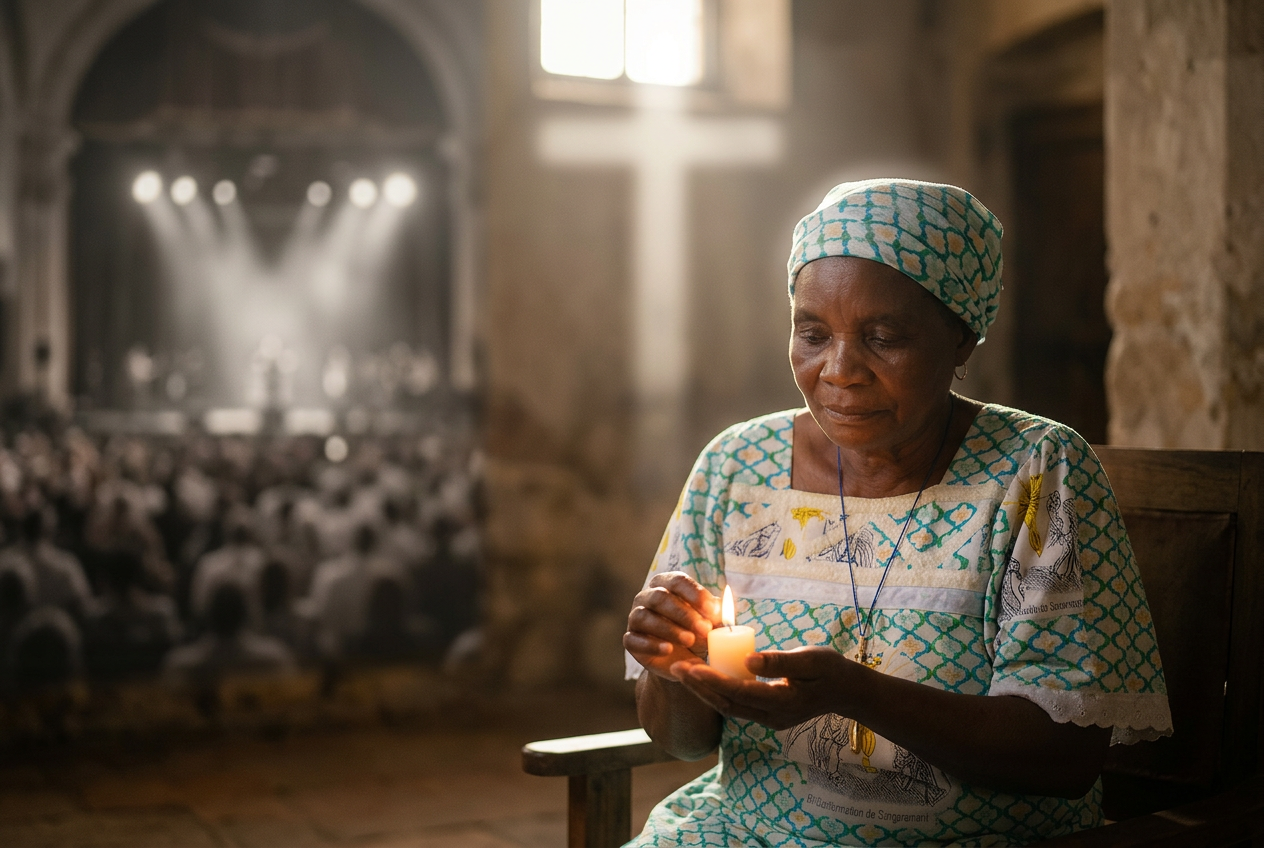
We have a problem with holiness. We imagine it needs spotlights. A stage. A dramatic conversion story with thunder and tears. But sit with that for a second. Doesn’t that feel wrong?
I used to think that way too. Then I came across the story of Maria Goretti. Not the famous saint from Italy. A different one. A mother. A woman who never gave a single sermon. Who never led a movement. Who rode her bicycle to Mass well into her late seventies, rain or shine, because the Eucharist mattered more than comfort.
Her son, Joseph Kinda, wrote a book about her. The Light She Left Behind: A Spiritual Journey of A Mother. And here is what stopped me cold. The book includes an inspirational Catholic book preface by Father Paul Dakissage. In those opening pages, Father Dakissage does something unusual. He doesn’t praise Maria Goretti for being extraordinary. He praises her for being faithful in the boring parts. The repetitive parts. The parts nobody films.
That is the real test of faith, isn’t it? Not whether you can rise to a crisis. But whether you can show up on a Tuesday morning when you are tired and nobody is watching.
The Laboratory of Daily Life: What Ordinary Holiness Actually Looks Like
Let me give you a picture. Maria Goretti fled a forced marriage at fifteen. Walked through the bush. Risked everything. That part sounds dramatic. But Joseph Kinda argues that the real story happened later. In the silence. In the daily choices.
She had no formal education. She could not quote theologians. But she developed what Father Dakissage calls a “pedagogy of silence.” She taught by being. Not by explaining.
Here is a small example from the book. Her second son, Bernard, drowned accidentally. A mother’s worst nightmare. She did not rage at God. But she also did not pretend it was fine. She sat in what the author calls a “dark night of the soul.” She kept praying even when heaven felt empty. That is naked faith. Not the polished kind you see on a stage. The kind that gets up and makes breakfast while grieving.
Another moment. She sold a family jewel, a precious heirloom, to buy her son a textbook. Not a luxury. A textbook. Why? Because she believed that transmitting knowledge mattered more than owning things. She lived the difference between “being” and “possessing” before she ever read a philosopher.
You can feel how this works in your own life. Think about the last time you listened to a frustrated coworker without checking your phone. Or made dinner after a long shift even though you wanted to collapse. Or forgave someone quietly without demanding an apology first. Those moments are not small. They are the laboratory. They are where character gets built.
Father Dakissage, in that preface, calls this “luminous anonymity.” A beautiful phrase. It means your courage can glow without anyone clapping. And that might be harder than public heroism. Because you get no reward except the knowledge that you stayed true.
When God Goes Silent: The Dark Night That Forges Real Faith
Here is where this blog could become vague. I will not let it. Let me name something uncomfortable.
Sometimes faith does not feel good. Sometimes you pray and nothing changes. Sometimes the person you forgave hurts you again. Maria Goretti knew this. After losing Bernard, she could have quit. She could have become bitter. But she did something else. She wove her grief into her prayers.
Joseph Kinda describes this as “spiritual alchemy.” Turning suffering into wisdom without pretending the suffering wasn’t real. That is not toxic positivity. That is honest hope.
A specific story from the book hit me hard. Maria Goretti had a difficult relationship with her daughter in law. Tensions. Misunderstandings. The normal family stuff that can rot a heart if you let it. But she chose to rise above vengeance. She did not wait for an apology. She loved anyway.
And here is the strange part. She died in that daughter in law’s sole presence. No one else was there. Joseph Kinda calls this providential. I call it a challenge. Could I love someone that freely? Could you?
This matters because most of us will never face a martyr’s death. But we will face a thousand small deaths. A friendship that sours. A child who pulls away. A dream that dies. And in those moments, the inspirational Catholic book preface by Father Paul Dakissage reminds us of something crucial. Holiness is not about feeling brave. It is about acting brave when you feel nothing.
You want a practical step? Try this tonight. Before you sleep, ask yourself one question. Where did I act with integrity today even though no one saw it? Do not add a second question. Just that one. Let it sit. You might surprise yourself.
FAQ: Your Questions About Ordinary Holiness, Answered
Q1: Isn’t “ordinary holiness” just an excuse for spiritual laziness?
No. That is like saying small meals are an excuse for starvation. Ordinary holiness demands more discipline than dramatic faith because you get no applause. Showing up every day for years is harder than one heroic weekend.
Q2: How is this different from just being a nice person?
Nice people often avoid conflict or seek approval. Ordinary holiness, as Joseph Kinda describes it, includes hard forgiveness, standing firm in principles, and sometimes saying no to your own comfort. It is not soft. It is quietly stubborn.
Q3: I don’t go to church. Can I still learn from Maria Goretti’s story?
Absolutely. The book draws on Catholic spirituality, but the core lessons apply anywhere. Being present. Choosing integrity when no one watches. Transforming grief rather than being destroyed by it. These are human universals.
Q4: What is the “faith of a coalman” that Father Dakissage mentions?
It is a beautiful term. A coalman does not debate the chemistry of combustion. He just knows how to keep the fire going. Similarly, this faith is not about mastering complex theology. It is about staying warm in the dark. About trusting what you have lived rather than what you can explain.
Q5: How do I start practicing this today without feeling overwhelmed?
Pick one tiny act. Make your bed with attention. Send one genuine text of encouragement. Forgive a small offense before it festers. Do not aim for a spiritual marathon. Aim for one faithful five minutes. Then another tomorrow. That is how Maria Goretti did it. One bicycle ride to Mass at a time.
A Final Thought to Walk With
You do not need to be a saint. You just need to be a little more faithful today than you were yesterday. That is the quiet revolution Father Dakissage writes about. That is the light Maria Goretti left behind.
And maybe that is enough. More than enough, actually. Because ordinary faith, lived over decades, stops being ordinary. It becomes a legacy that nobody can take from you.
So go. Make the meal. Say the kind word. Ride the bicycle. The world will not applaud. But something in you will shift. And that shift is everything.