
Catholic Parish Priest Father Paul Dakissage Message: Faith Shared Through Presence and Reflection
- Articles
- Catholic Parish Priest Father Paul Dakissage Message: Faith Shared Through Presence and Reflection
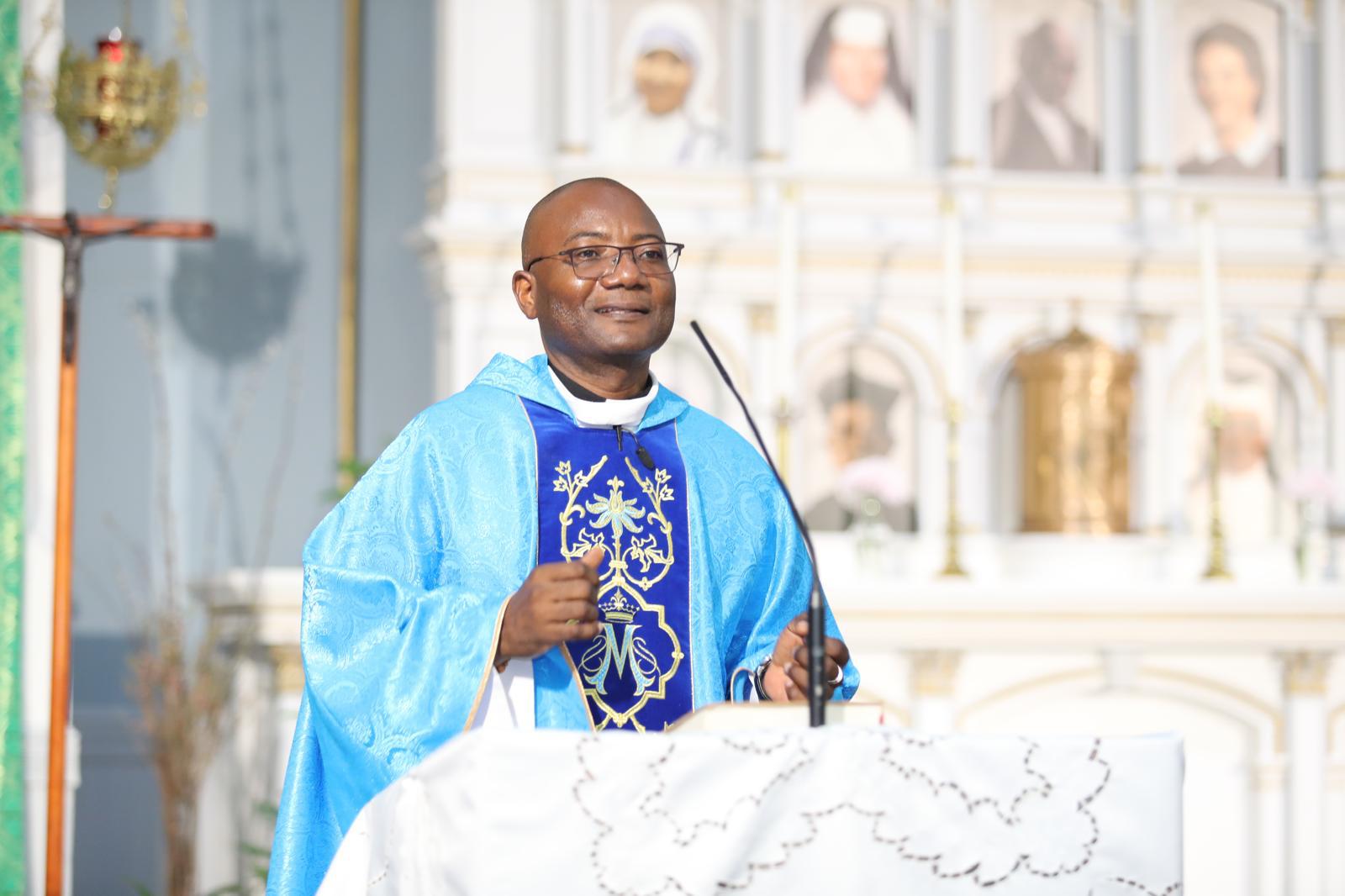
Parish priests rarely offer messages with the intention of persuading or performing. The system maintains its operating duration while using less power. The Catholic Parish Priest Father Paul Dakissage Message that is a prime example of a spiritual communication approach grounded in consistency, focus, and active faith. The concepts discussed in this work encourage patience and introspection, which lead to the practice of going back to the beginning instead of making a definitive choice.
Parish life functions through continuous communication, which extends beyond single announcements. The community maintains an ongoing connection with its priest through shared religious practices, customary meetings, and historical knowledge.
Parish Messages as Ongoing Conversation
A parish priest’s message evolves, unlike written doctrine or public speeches. Instead of being a singular teaching moment, each reflection builds upon the one before it, creating a spiritual dialogue.
The Catholic Parish Priest Father Paul Dakissage Message functions within this continuity:
- It assumes familiarity instead of novelty.
- It speaks to shared experiences.
- It evolves alongside the community.
Instead of being supplied all at once, meaning builds up over time.
Context’s Function in Parish Communication
The current environment of a church shapes its sermon. It reacts to the community’s emotional rhythm, local issues, and the liturgical calendar’s seasons.
Parish messages are relevant because of this responsiveness. They don’t exist apart from people or places. Instead, they are imbued in the day-to-day living of the parish.
Anchoring greatly boosts credibility and engenders trust.
Faith Communicated Through Tone, Not Urgency
One defining characteristic of parish-based messages is restraint. The message is conveyed steadily, other than with show or urgency.
This approach allows faith to remain accessible:
- Listeners are invited rather than compelled.
- Silence is given space.
- Reflection is encouraged.
The Catholic Parish Priest Father Paul Dakissage Message, emphasizes presence over persuasion.
Message as Accompaniment
Accompanying people and families in both ordinary and difficult times is part of a parish priest’s work. Messages offered within this framework reflect care instead of authority alone.
They acknowledge:
- Uncertainty as part of belief.
- Growth occurs gradually.
- Faith lived instead of perfected.
This acknowledgment allows messages to resonate across varied experiences.
The Value of Repetition and Experience
Recurring themes are frequently mentioned in parish communications. This recurrence is reinforcement other than redundancy. Over time, meaning can get more complex with familiar language.
Repetition supports:
- Reflection rather than reaction.
- Internalization rather than memorization.
- Continuity across life stages.
Listeners encounter the same ideas differently as their circumstances change.
Language That Creates Space
The language used in parish messages is typically measured and inclusive. It avoids abstraction when possible, favoring examples drawn from daily life.
This style ensures:
- Accessibility across generations.
- Pertinence to daily choices.
- Emotional resonance without going overboard.
The Catholic Parish Priest Father Paul Dakissage Message reflects this balanced use of language.
The Ministry of Nuance: Using Intentional Omission to Pastor
What Father Dakissage chooses not to disclose is a crucial component of his message. Pastoral communication requires its ministers to treat their work as a means of showing people the value of complete truth as they pursue their ministry goals. Pastoral communication requires its ministers to show complete respect for the complex nature of human conscience and the hidden process of divine grace.
There are several ways that this pastoral subtlety manifests:
Avoid Absolute Language: The terms “always” and “never” should be avoided since they produce absolute claims. Instead, “often,” “may,” and “can,” which enable the recognition of exceptions and particular circumstances, should be used.
Withholding Immediate Solutions: The solution should be processed through an evaluation, which requires waiting until the evaluation is complete.
Balancing Truth and Mercy: The dual nature of truth and mercy shows itself through the church’s presentation of its doctrines, which guide people toward confession and divine forgiveness, yet the law, which should not obscure, must preserve the gospel’s message of mercy.
The parishioners have a safe space in which they can express themselves honestly, because the speaker delivered his complex message through a detailed speech that helps them access their religious beliefs.
Faith Rooted in Lived Experience
Instead of relying on theoretical certainties, parish messages are strengthened by experience. Scripture and tradition are linked to actual issues, such as family, job, loss, thankfulness, and hope.
By doing so, faith is presented as an orientation instead of an answer. Listeners are encouraged to reflect rather than resolve.
This approach aligns belief with how life is lived.
Community as Listener and Participant
The message does not belong to the speaker alone in a church environment. The communication is completed by the community’s response, which may take the form of a ceremony, quiet, or mutual understanding.
This shared participation reinforces:
- Collective memory.
- Mutual responsibility.
- Shared spiritual language.
The message becomes part of communal identity.
Core Characteristics of the Catholic Parish Priest Father Paul Dakissage Message
From an editorial perspective, several features consistently shape these messages.
They are marked by:
- Continuity instead of novelty.
- Reflection on instruction.
- Presence instead of urgency.
- Connection to local experience.
- Respect for spiritual complexity.
These characteristics allow messages to endure beyond the moment of delivery.
Why Parish Messages Continue to Matter
In an environment saturated with information, parish messages offer something distinct: steadiness. They provide rhythm rather than interruption.
Their relevance lies not in scale but in consistency. They remain meaningful because they are embedded within lived relationships.
Catholic Parish Priest Father Paul Dakissage Message demonstrates how faith is sustained through attention, patience, and shared presence.
FAQs | Understand About Catholic Parish Priest Father Paul Dakissage Message
Q1: What defines a parish priest’s message?
It is a reflective communication rooted in community, continuity, and lived faith.
Q2: Are parish messages intended to instruct or reflect?
They primarily invite reflection while offering guidance grounded in experience.
Q3: Why is repetition common in parish messages?
Repetition deepens understanding and supports long-term reflection.
Q4: Do parish messages address doubt and uncertainty?
Yes. They often acknowledge uncertainty as part of spiritual life.
Q5: How do parish messages differ from public religious talks?
Ongoing relationships and shared community context shape them.

Joseph Kind World
Lorem ipsum dolor sit amet consectetur adipiscing elit dolor
Post Info
Latest Posts
We have a problem with holiness. We imagine it needs spotlights. A stage. A dramatic conversion story with thunder and […]

We grow up thinking significance requires visibility. A brand. A following. A name people recognize. But the people who truly […]
One morning, a woman in her seventies woke up and could not make a fist… her fingers had curled overnight. […]
Some lessons are not taught from a pulpit. They are learned by watching someone live. Joseph Kinda learned that way. […]


